

Dental Treatments: Oral Surgery and Endodontic Therapy
🦷 Dental Treatments: Oral Surgery and Endodontic Therapy
Oral health plays a vital role in maintaining overall well-being, as dental problems can affect nutrition, speech, and even systemic health. Among the most important branches of dentistry that focus on preserving teeth and their functions are oral surgery and endodontic (root canal) therapy.
1. Oral Surgery
Definition
Oral surgery is a specialized branch of dentistry that deals with surgical interventions in the mouth, jaws, and related structures to treat conditions that cannot be managed by conventional dental procedures.
Types of Oral Surgery
-
Surgical Tooth Extraction: Performed when a tooth is partially or completely impacted in the bone, such as wisdom teeth removal.
-
Periodontal Surgery: Aimed at treating chronic gum diseases and reshaping the gum and bone tissues.
-
Dental Implants: One of the most common surgical procedures used to replace missing teeth with artificial roots that integrate into the jawbone.
-
Orthognathic (Jaw) Surgery: Corrects jaw deformities or injuries resulting from trauma.
-
Cyst and Tumor Removal: Involves the surgical removal of cysts or benign tumors in the oral cavity or jawbone.
Importance of Oral Surgery
Oral surgery helps restore normal oral function, improve aesthetics, and prevent future complications such as gum disease or bone loss.
2. Endodontic (Root Canal) Therapy
Definition
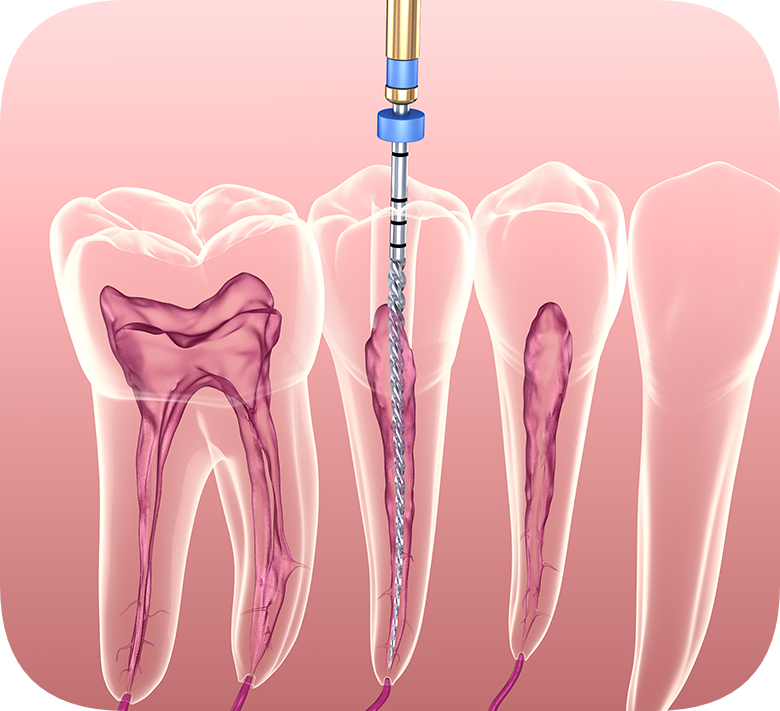
Endodontic therapy, commonly known as root canal treatment, aims to save a tooth whose pulp (the inner tissue containing nerves and blood vessels) has become infected or inflamed due to deep decay or trauma.
Steps of Root Canal Treatment
-
Diagnosis: X-rays are used to determine the extent of pulp damage.
-
Access Opening: The dentist creates an opening in the tooth to reach the root canal system.
-
Pulp Removal: The infected pulp tissue is removed, and the canals are thoroughly cleaned and disinfected.
-
Filling the Canals: The cleaned canals are filled with a special biocompatible material (usually gutta-percha) to prevent reinfection.
-
Tooth Restoration: The treated tooth is often restored with a crown to protect it from fracture and restore function.
Benefits of Root Canal Therapy
-
Preserves the natural tooth structure.
-
Eliminates pain and infection.
-
Maintains proper chewing function and jaw alignment.
3. The Connection Between Oral Surgery and Endodontics
In certain cases, oral surgery and endodontic therapy overlap. One common example is apicoectomy (root-end surgery), which is performed when conventional root canal treatment fails to completely eliminate the infection at the tip of the tooth’s root. The surgical procedure removes the infected portion and seals the root end to prevent further bacterial invasion.
Conclusion
Both oral surgery and endodontic therapy are essential pillars of modern dentistry. They work together to preserve natural teeth, restore oral health, and enhance patients’ quality of life. For long-term success, maintaining good oral hygiene and scheduling regular dental checkups are crucial.



2 comments
Tom Monroe
December 17, 2015 at 9:29 am
Objectively innovate empowered manufactured products whereas parallel platforms. Holisticly predominate extensible testing procedures for reliable supply chains. Dramatically engage top-line web services vis-a-vis cutting-edge deliverables.
Jessica Brown
December 17, 2015 at 9:30 am
Phosfluorescently engage worldwide methodologies with web-enabled technology. Interactively coordinate proactive e-commerce via process-centric \”outside the box\” thinking. Completely pursue scalable customer service through sustainable potentialities.
Collaboratively administrate turnkey channels whereas virtual e-tailers. Objectively seize scalable metrics whereas proactive e-services. Seamlessly empower fully researched growth strategies and interoperable internal or \”organic\” sources.